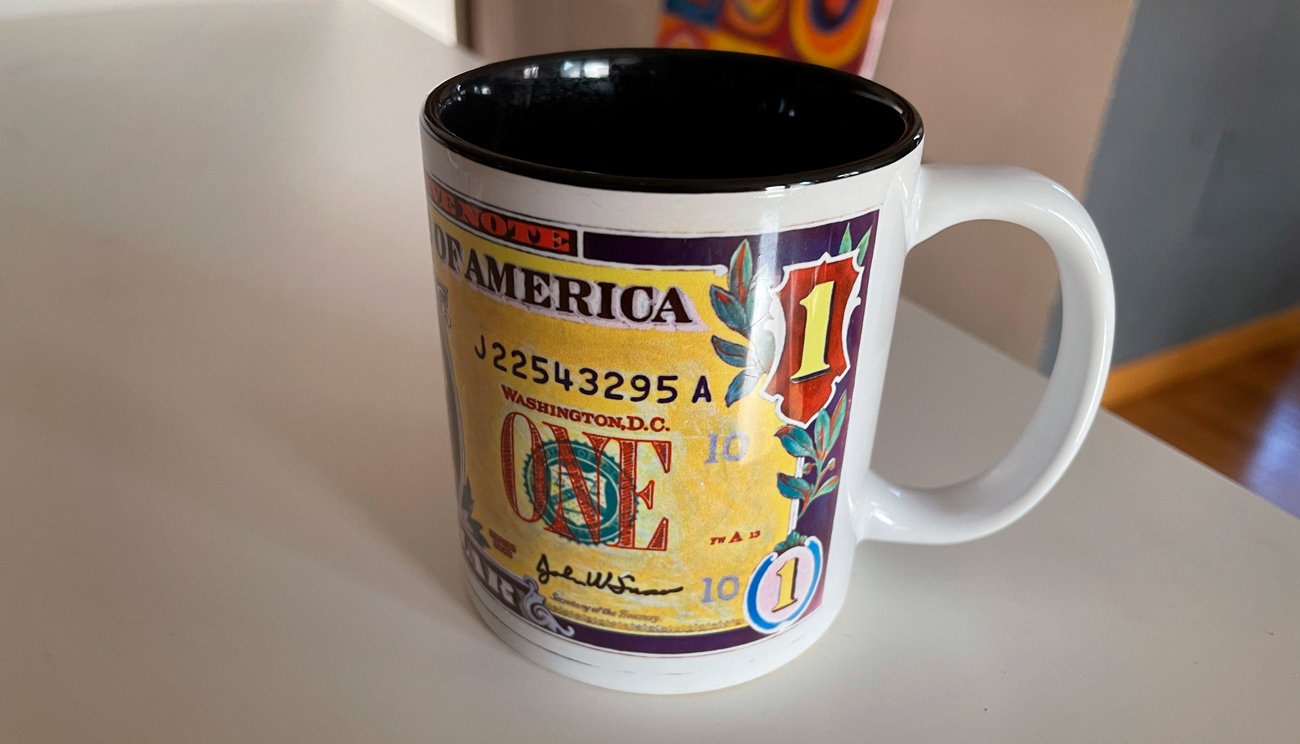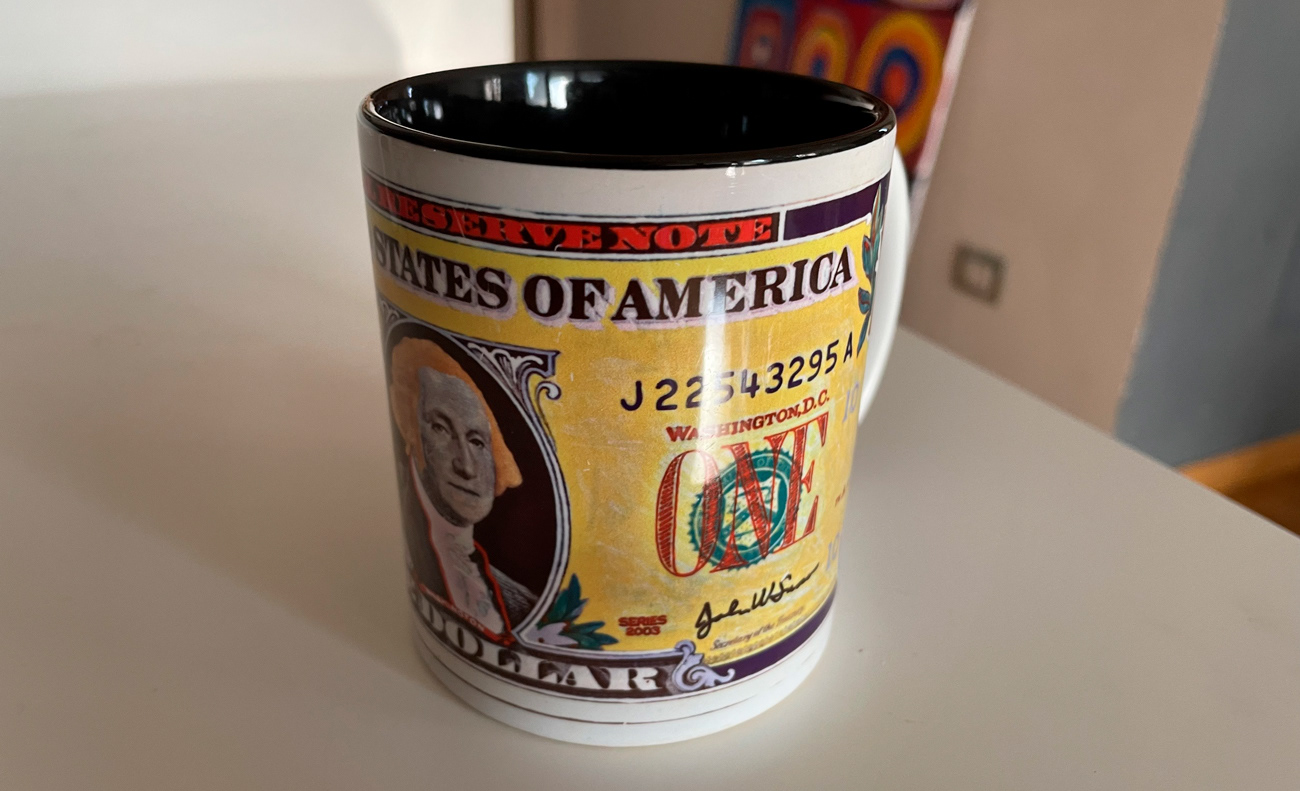
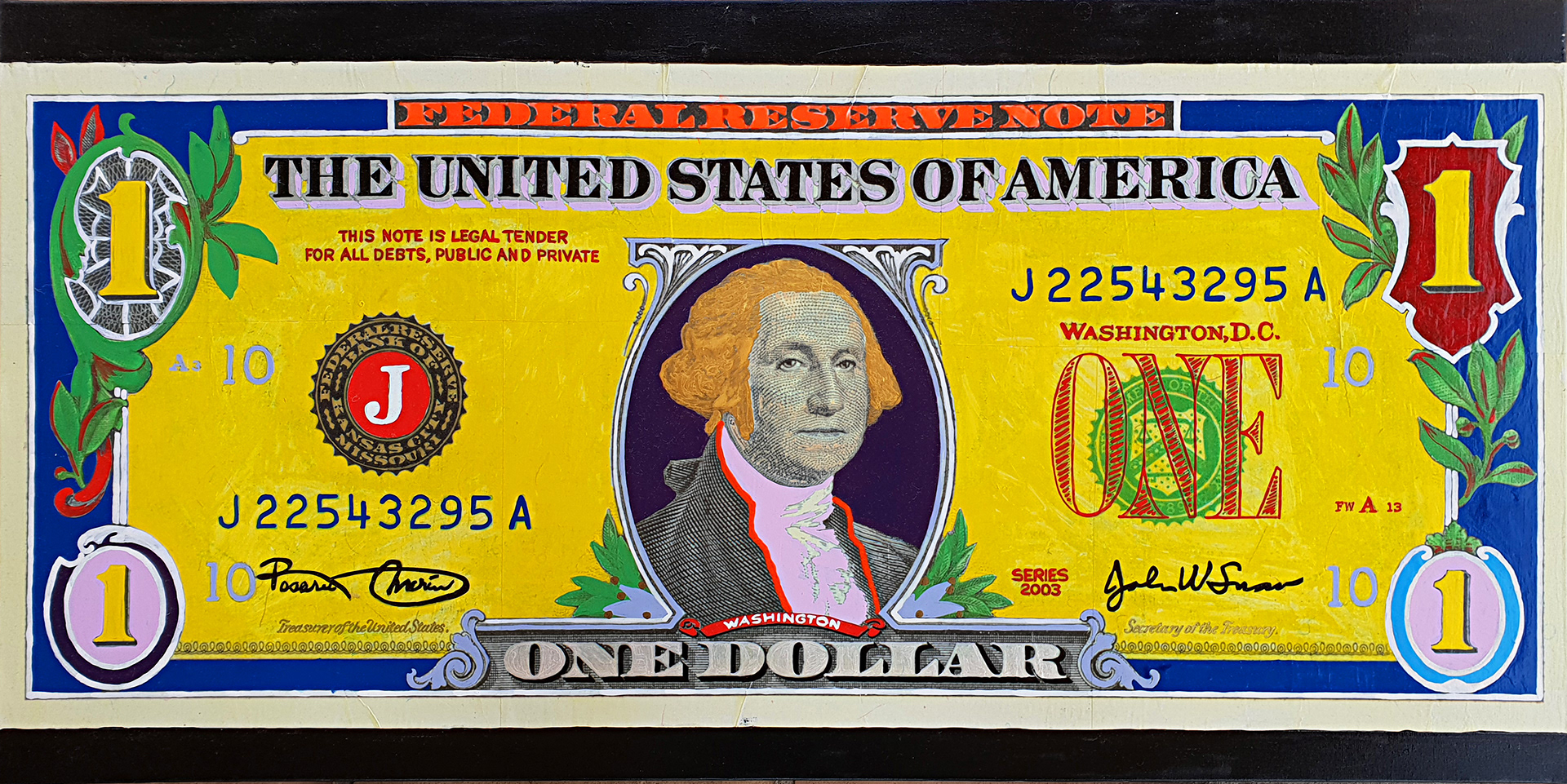
The dollar is, par excellence, the minimal unit of American capitalism. It is both a concrete measure and an abstract myth: a daily instrument and an ideological relic. At its center stands George Washington, the first president — a foundational figure of the nation, a face embodying the political origins of the United States. In this work, however, his portrait is removed from the austere monochrome of the official engraving and immersed in a vivid, almost irreverent palette. The dominant yellow, saturated and artificial, dissolves the austere patina of the original banknote, transforming it into a visual manifesto.
The chromatic intervention is not mere decoration, but an act of desecration. The banknote — an object that traditionally claims neutrality and authority — is unmasked as a symbolic construction. The artist performs a distinctly pop operation: taking an icon of economic power and exposing it to the language of advertising, amplifying its colors and intensifying its contrasts until the theatrical nature of money itself emerges.
Thus recolored, the dollar appears less as a tool of value and more as an image of value. The face of Washington — father of the nation, guarantor of a nascent democracy — is embedded within a graphic system that today represents global financial dominance. The artist places these two poles in tension: political history and economic power, ideal foundation and contemporary commodification. The banknote becomes a kind of palimpsest in which the epic narrative of America’s birth is gradually absorbed and redefined by the logic of capital.
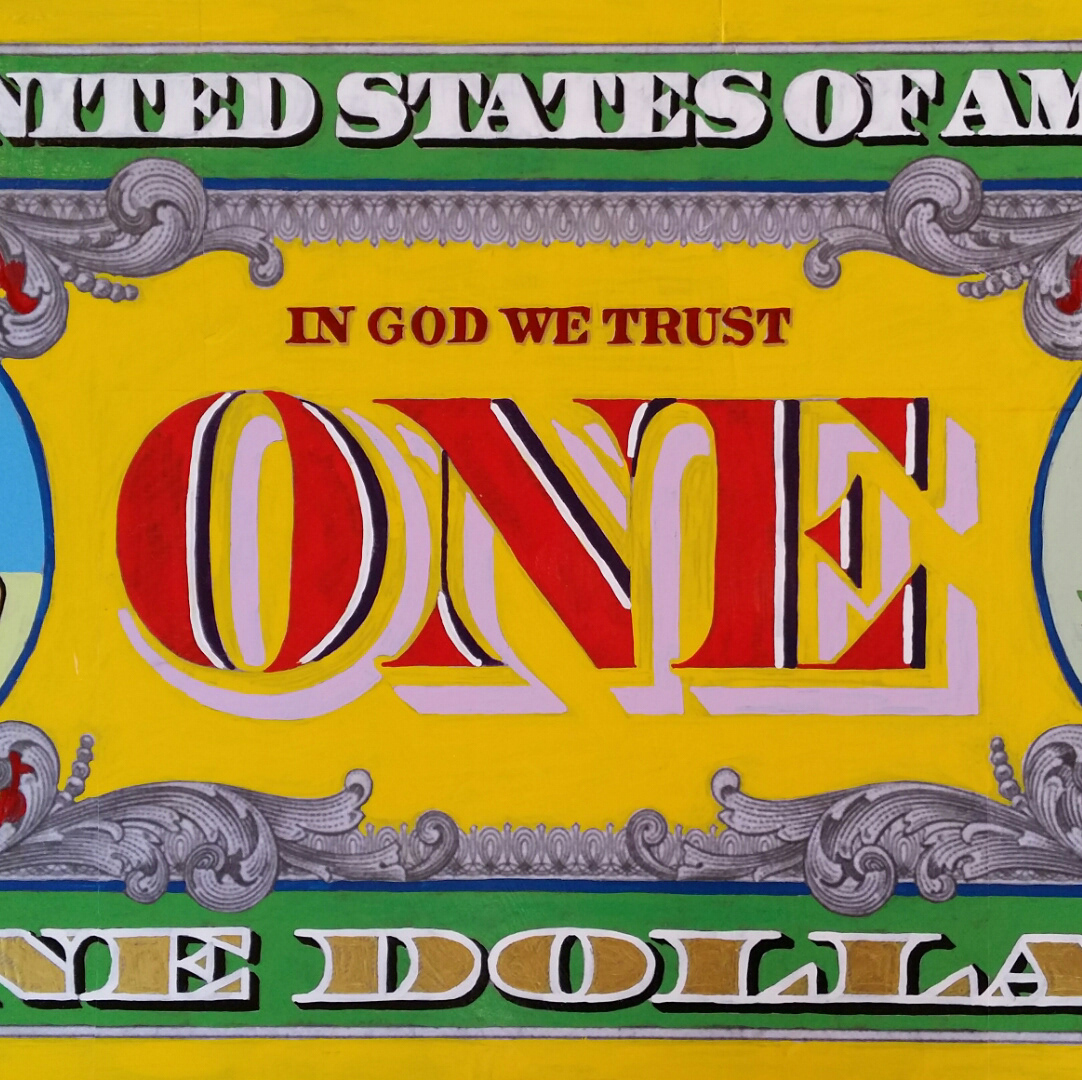
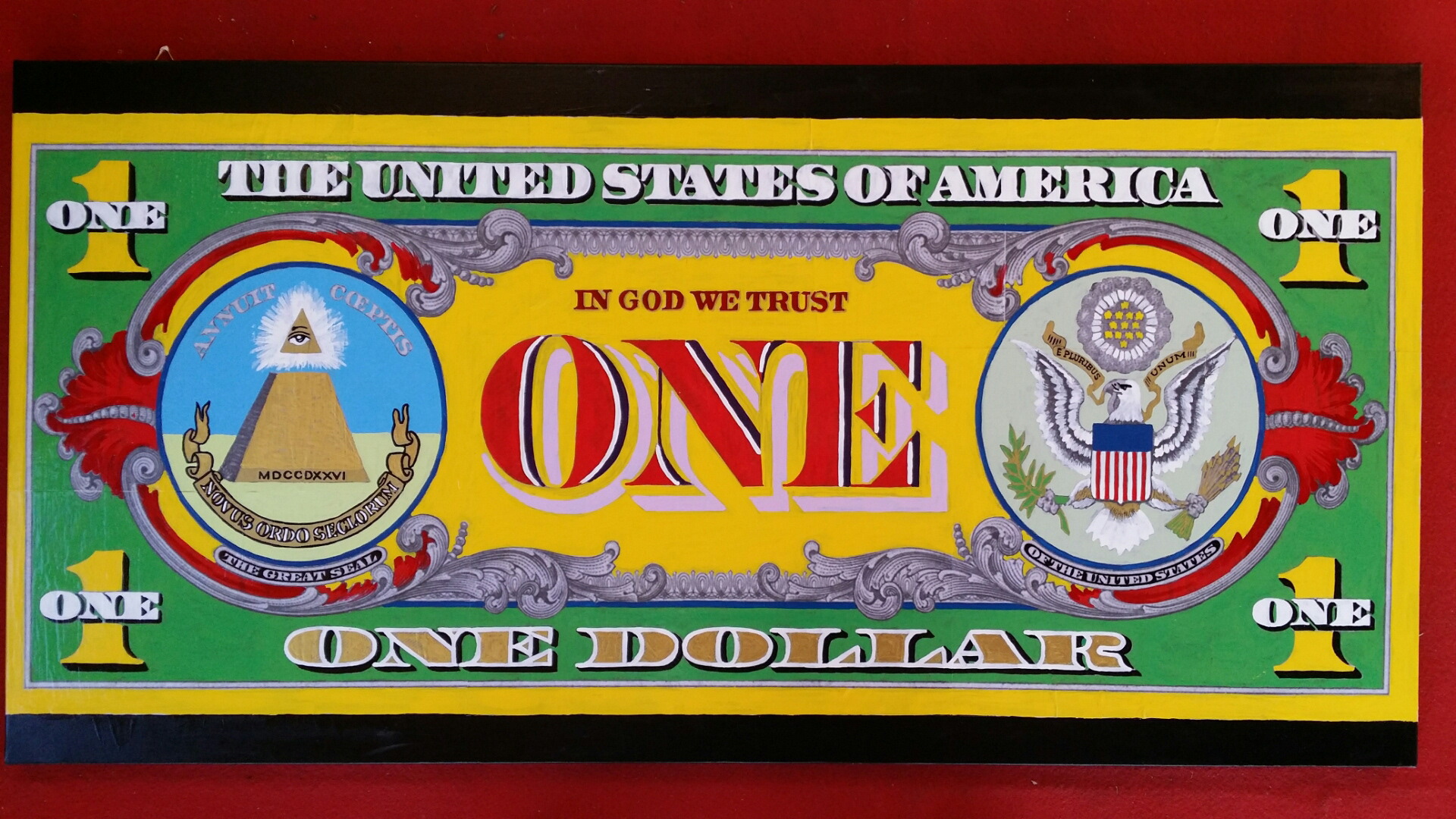
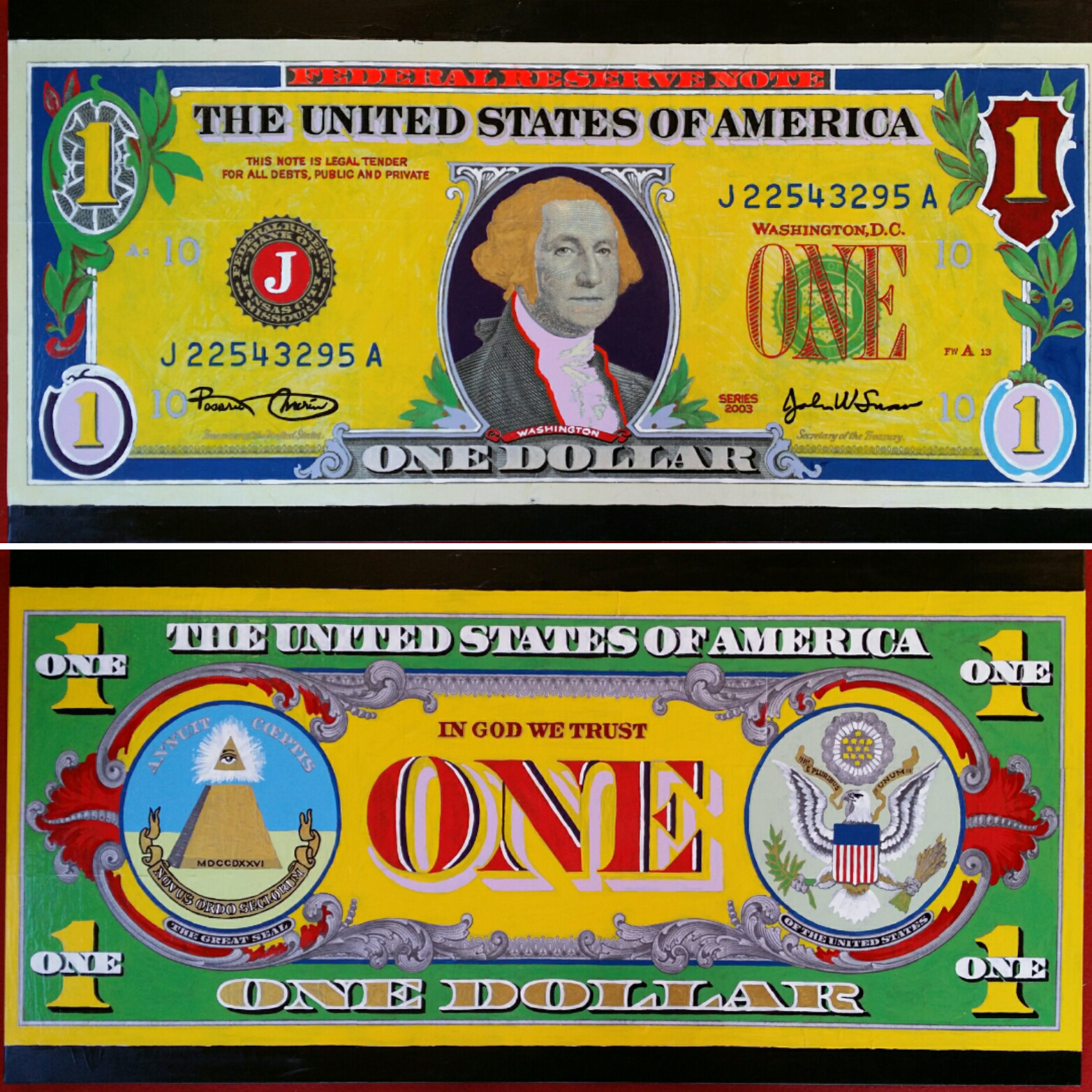
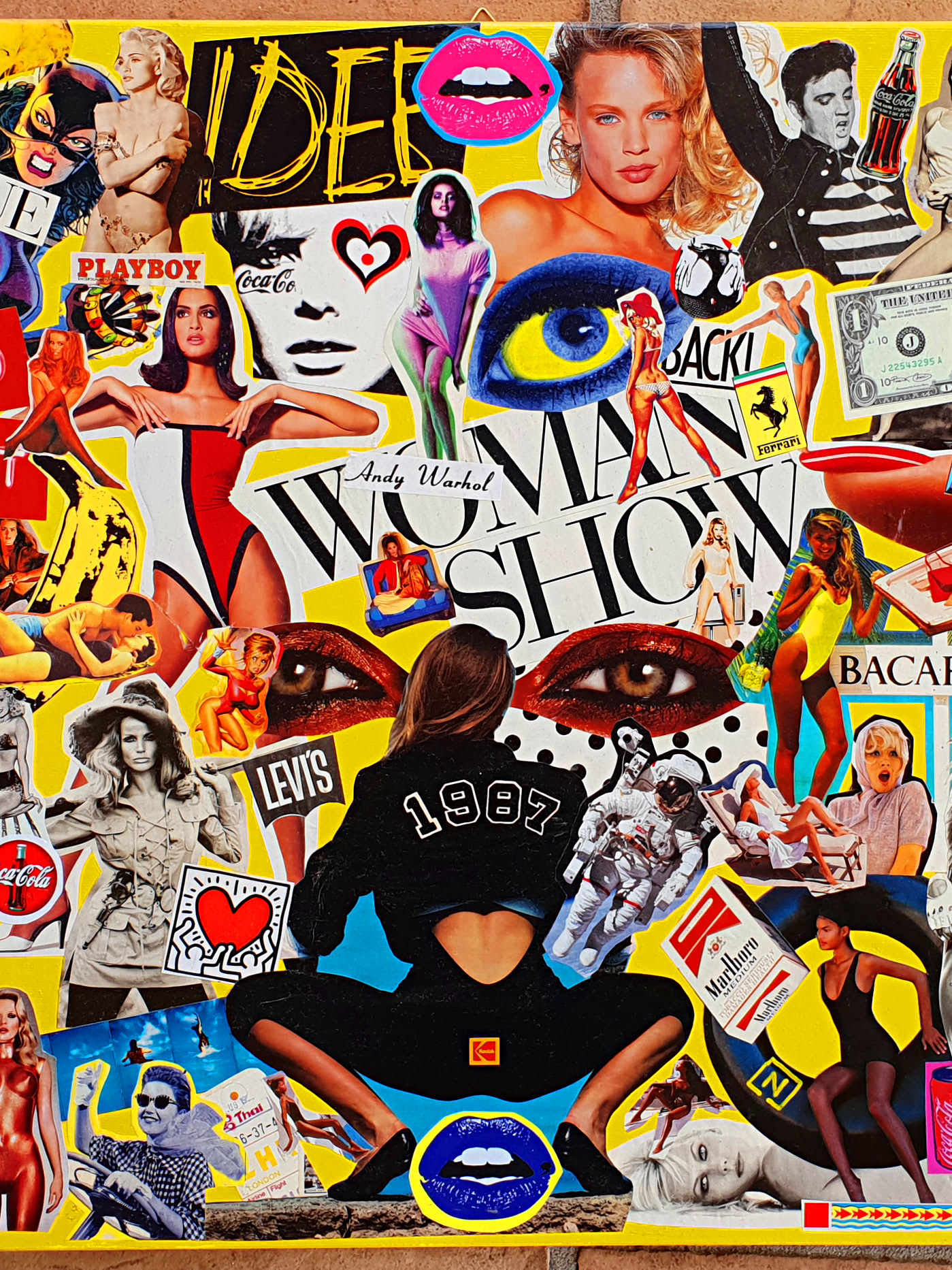
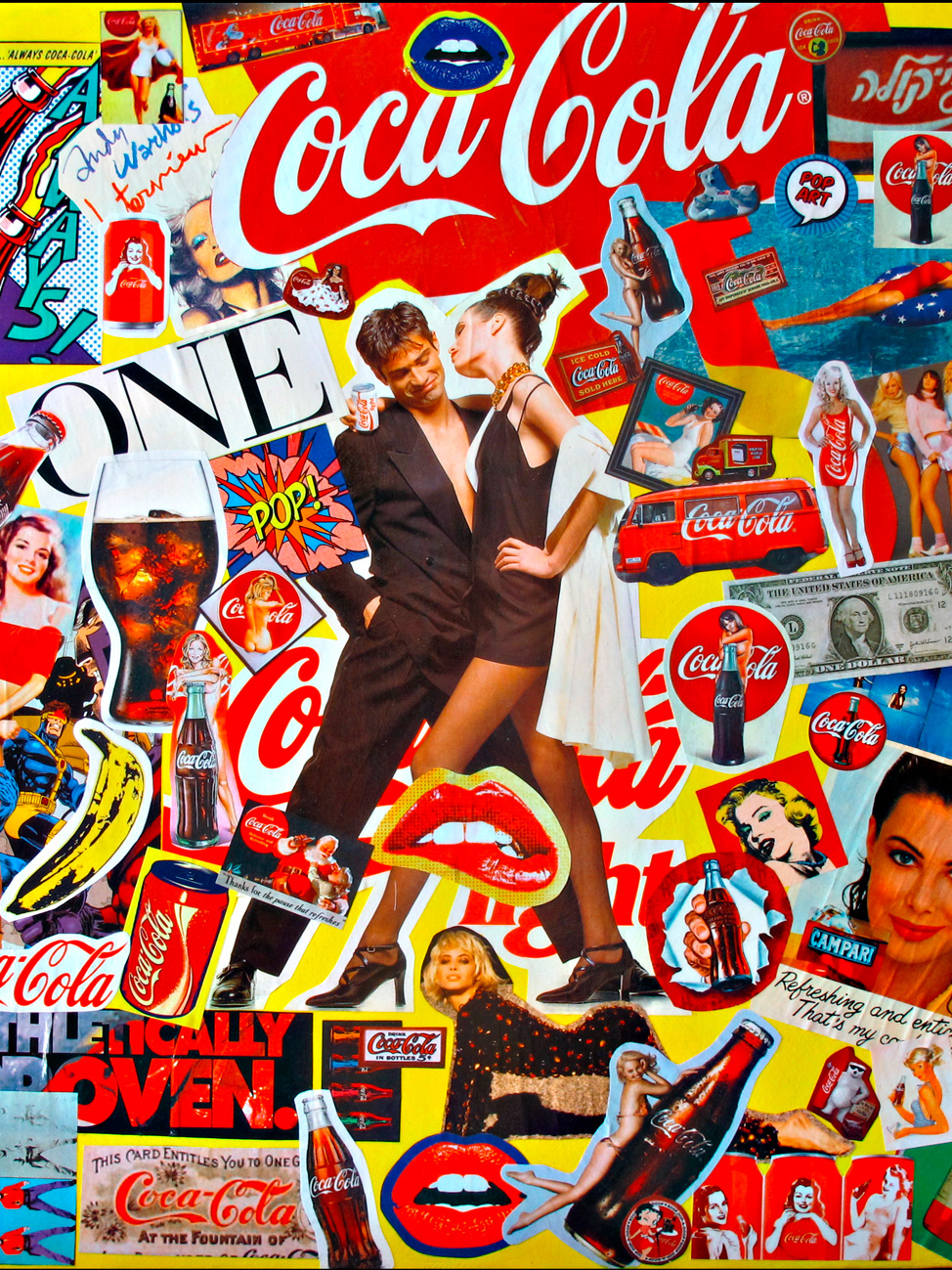
Pop aesthetics, with its vivid colors and declared frontality, is not accidental. It recalls the legacy of Warhol and the tradition of iconic seriality, yet here the operation takes on an additional layer of ambiguity: it is not merely a celebration of the image, but a short circuit between sacredness and consumption. The dollar — an almost liturgical object of American culture — is desacralized precisely through the visual intensification that makes it more seductive.
It is a critique that operates through seduction itself, rather than through rejection.
The 100 × 50 cm format amplifies this effect: enlarged, the banknote loses its practical function and acquires monumentality. What normally passes from hand to hand unnoticed becomes an object of contemplation. The monetary unit is transformed into a museum icon, and in this shift a reversal takes place: money, once the measure of art within the market, becomes itself an artistic object. One-Dollar-Pop thus emerges as a visual reflection on value — economic, historical, symbolic. It desacralizes the monetary fetish without denying its allure, staging the founding contradiction of America: a nation born from elevated political ideals that has become the epicenter of global capitalism. Within this space of tension between foundational myth and financial power, the work finds its critical force, transforming the dollar into a chromatic mirror of contemporary American identity.