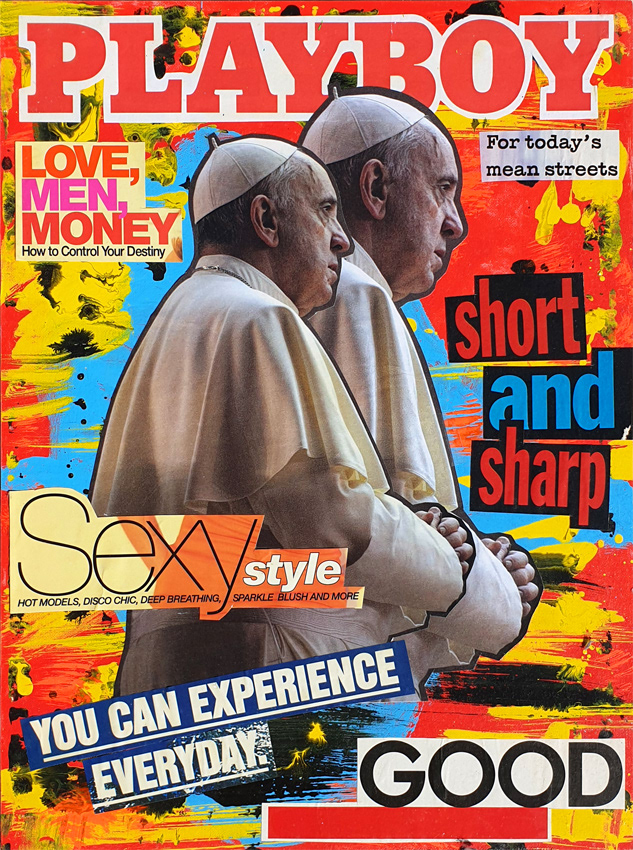
Placing Pope Francis within this visual space means subverting the traditional paradigm of ecclesiastical representation. Yet the papal figure is not ridiculed; on the contrary, its media charisma, communicative power, and linguistic modernity are emphasized. The double portrait, almost mirrored, amplifies his stage presence and suggests a reflection on iconic duplication in the age of digital reproducibility.
The headlines dominating the cover — built on double meanings, semantic ambiguity, and the typical lexicon of magazines — generate an intelligent, never corrosive irony. “Love, Men, Money,” “Short and Sharp,” “Sexy Style”: the language of seduction is bent into a semantic short circuit in which the word “sexy” no longer refers to the exposed body, but to charisma, to the power of symbolic attraction. Here, seduction lies in ideas, reform, and the break from institutional rigidity.
The aesthetic of the work — chromatically explosive, layered, almost vandalistic in the background — amplifies the tension between the sacred and pop culture. The dominant red, the acidic contrasts, the drips and graphic overlays evoke street art and the contemporary urban visual landscape. It is as if the figure of the Pope were immersed in the visual chaos of the present, traversed by the energies of global communication. The result is a reflection on authority in the age of the image. If in the past power asserted itself through distance and silence, today it is consolidated through visibility and narrative. Pope-Playboy stages this transformation: the pontiff does not lose his sacredness, but redefines it within a media ecosystem where attention is the new symbolic currency.
The work reinterprets and transforms Pope Francis into a pop icon to highlight how his figure has crossed the traditional boundaries of ecclesiastical representation, becoming a cultural phenomenon, a media presence, and a protagonist in a global dialogue.