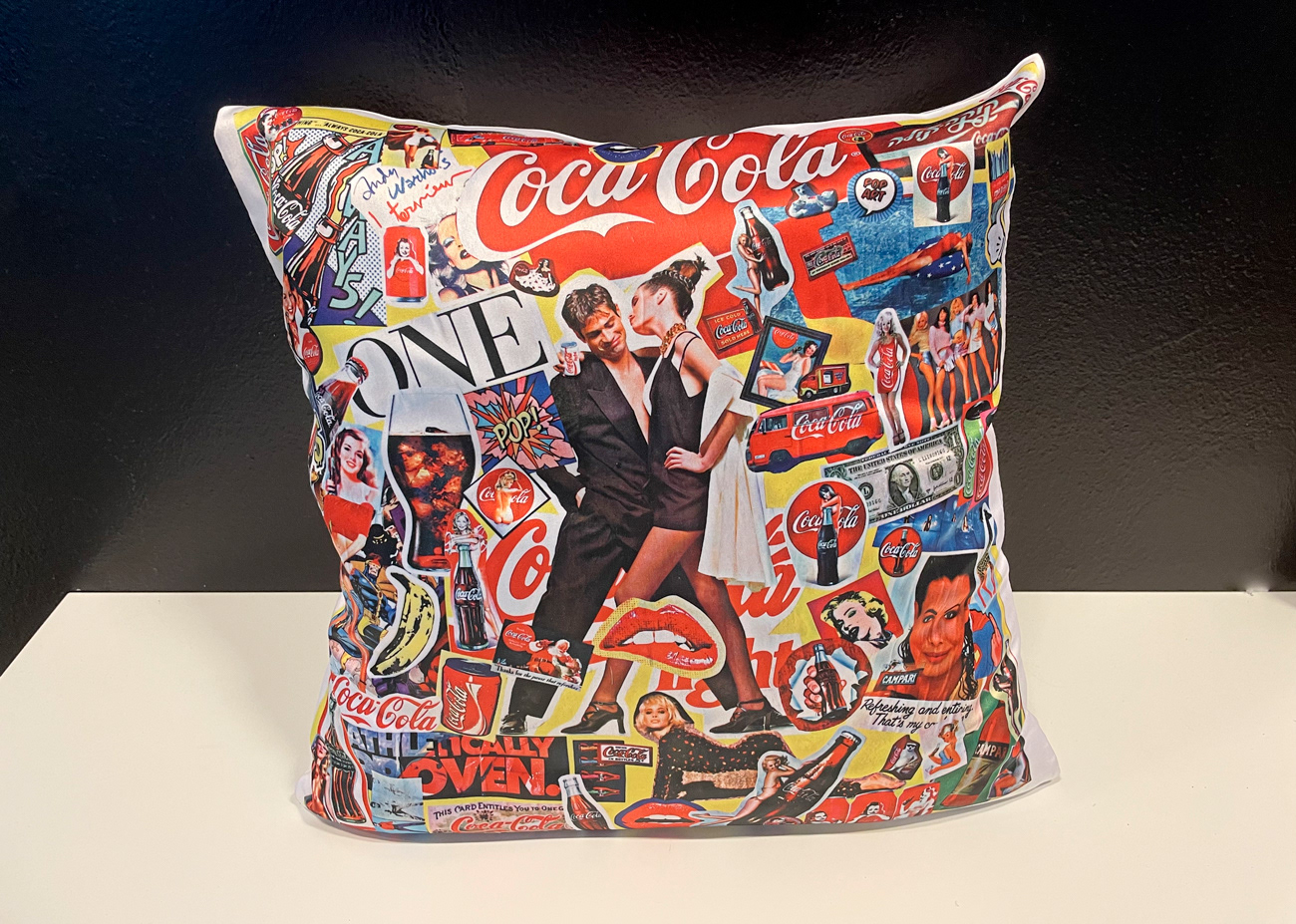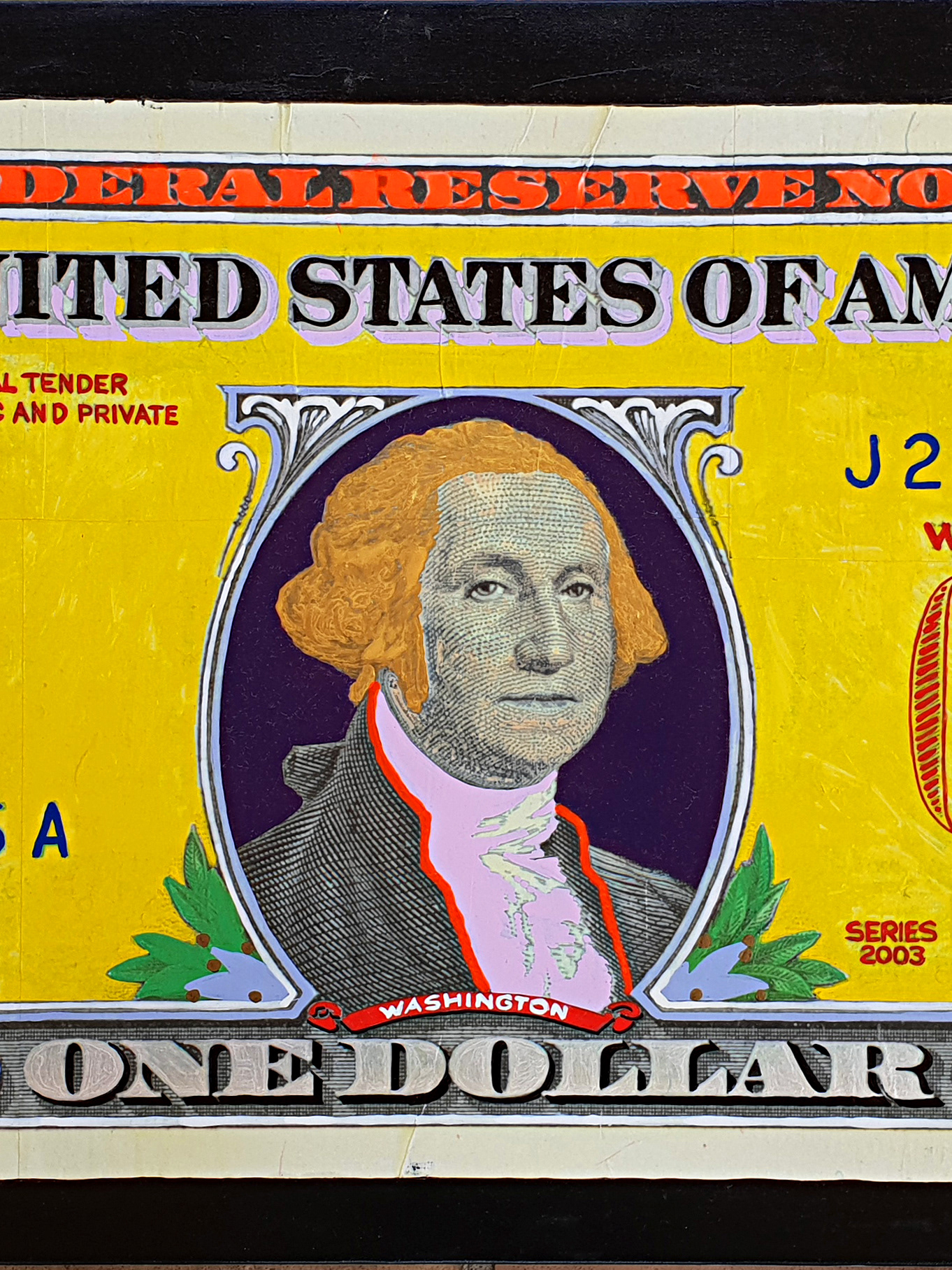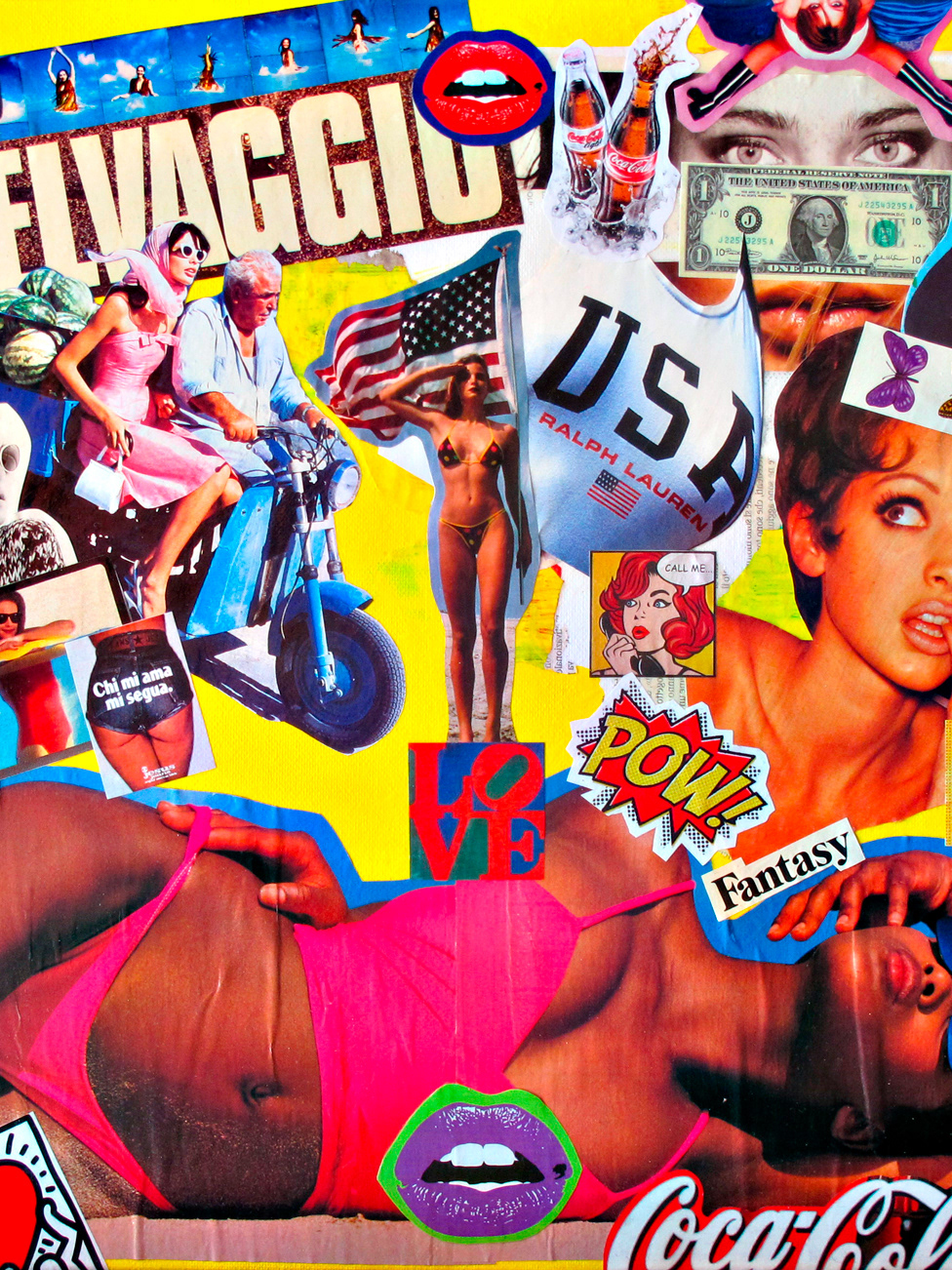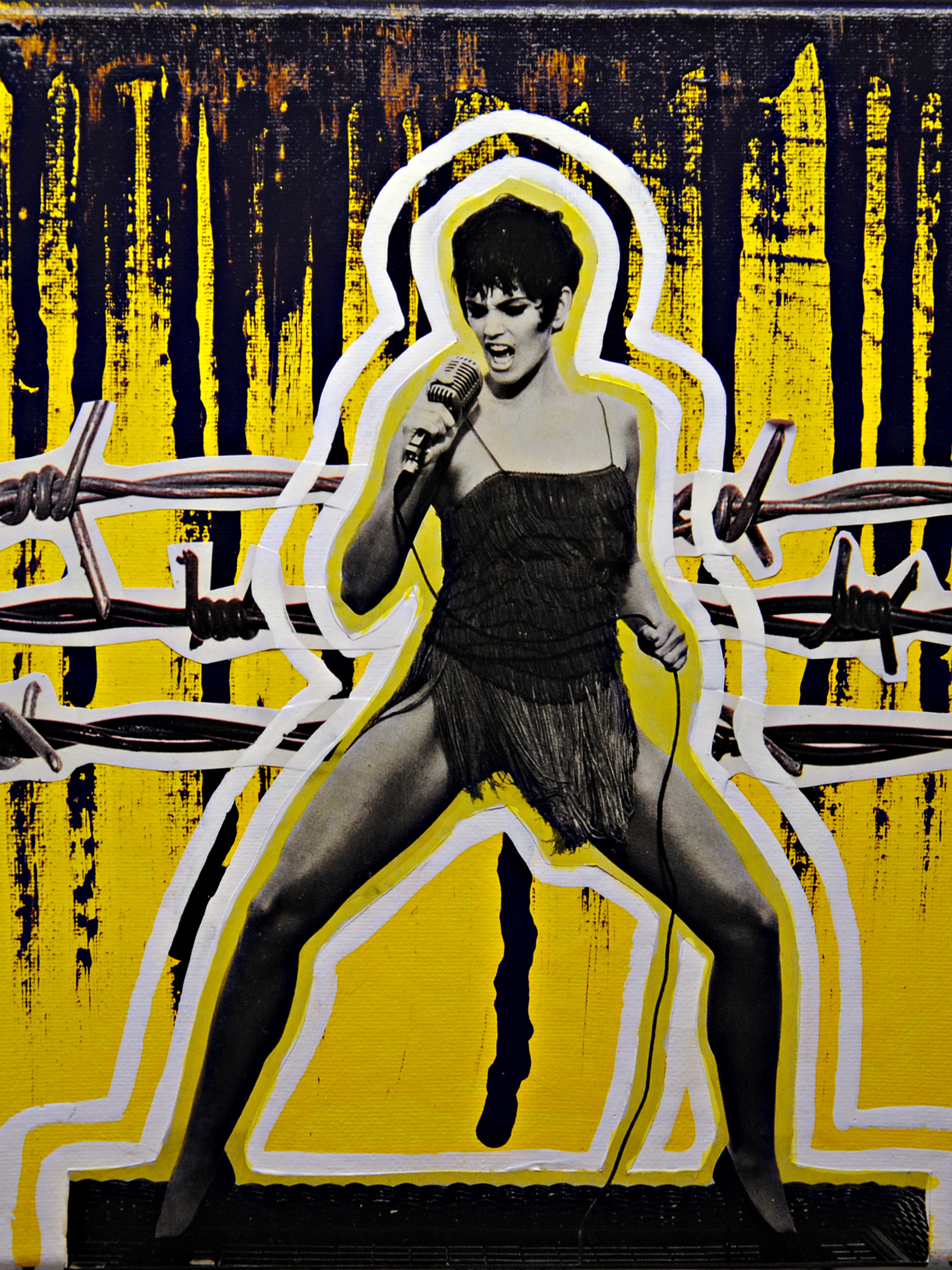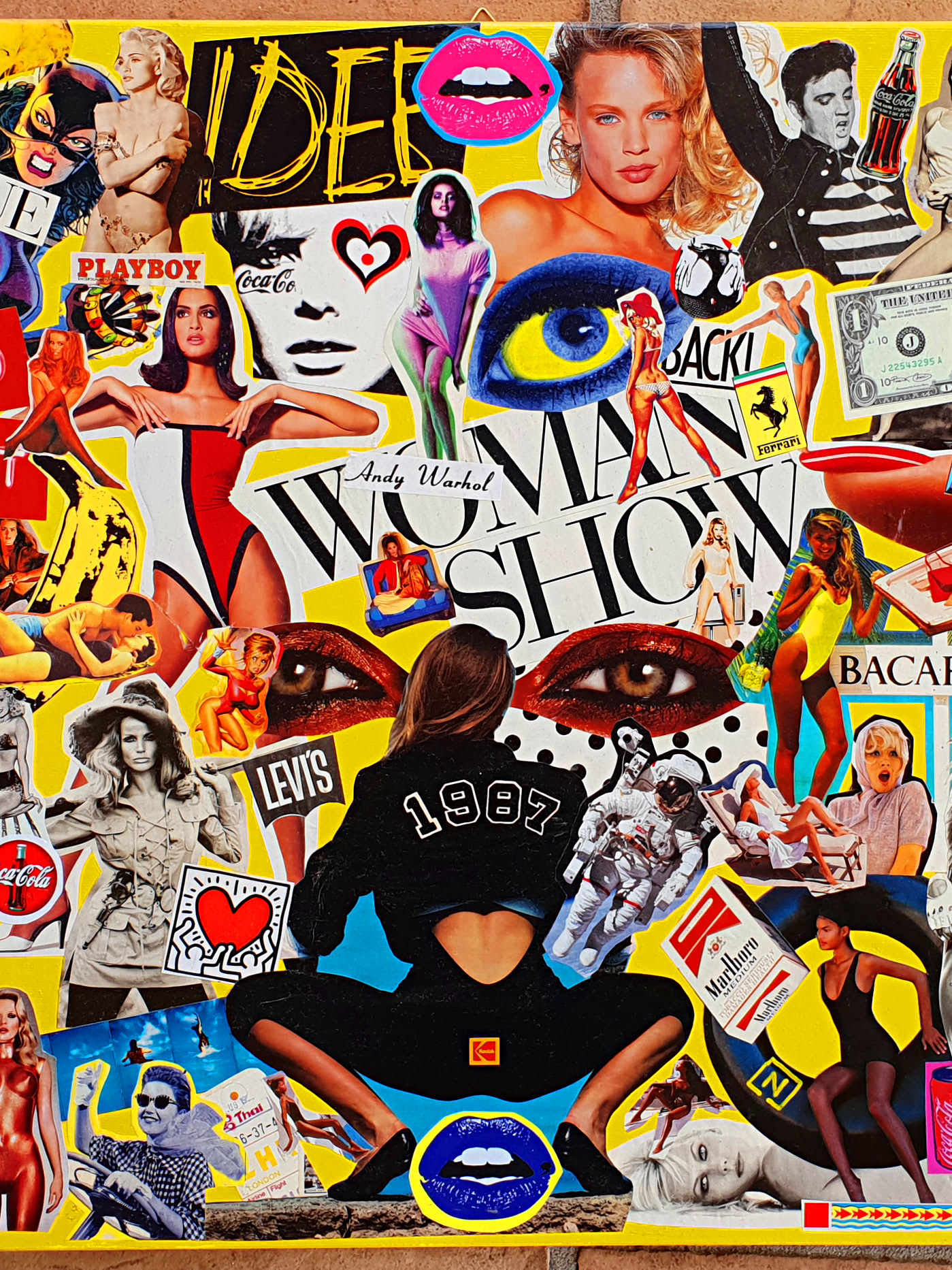
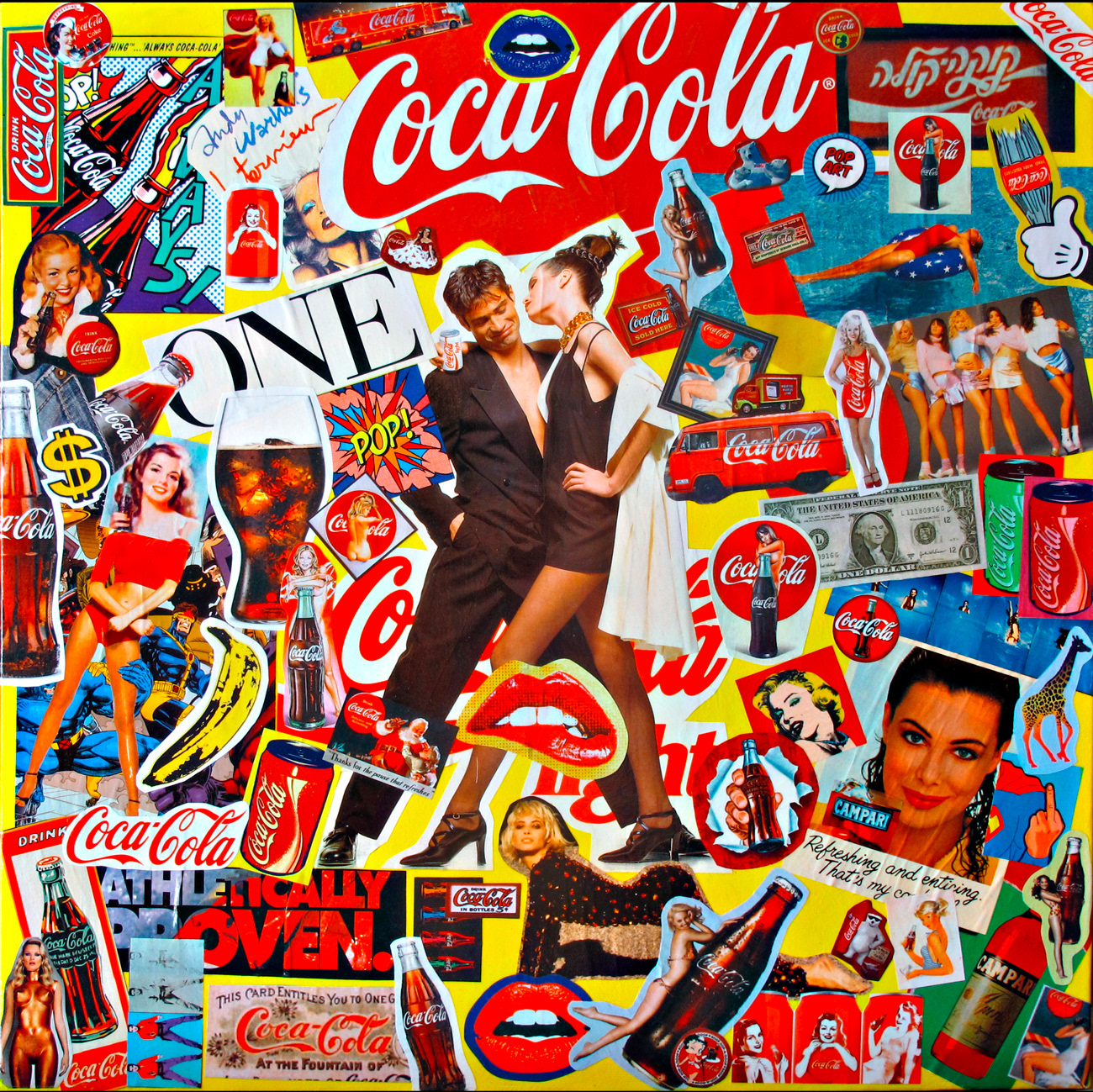
Coca-Cola is no longer presented as a mere brand but as a symbolic system. The red logo dominates the composition as an all-encompassing signature — a presence that does not simply accompany the image but governs it.
At the center, an elegant couple — young, sophisticated, precisely balanced between sensuality and control — embodies the 1990s archetype of international yuppie culture: Milan’s “Milano da bere,” New York’s financial elite, disciplined hedonism, success as posture. They are not individuals but aspirational constructs, the human face of glamour capitalism. Surrounding them unfolds a layered visual universe spanning decades of Coca-Cola advertising: pin-ups, vintage cans, iconic bottles, slogans, dollar bills, comic references, and pop imagery. The brand is not framed as product but as continuous narrative — a serial mythology capable of traversing time while adapting to shifting cultural codes without losing recognizability.
By the 1990s, the logo had ceased to be a graphic sign and became a marker of cultural belonging. To wear it, drink it, display it meant aligning with a global imaginary. The central couple does not simply consume Coca-Cola; they embody it. The work neither openly condemns nor celebrates. Instead, it reveals the iconic power of the brand as a transversal symbol — one that moves across social classes, generations, and geographies with seamless authority.